The Maasai are East Africa’s most recognisable community — semi-nomadic pastoralists whose homeland stretches across northern and central Tanzania and into Kenya. Their lands overlap many of the parks on this platform, and several conservation areas — Ngorongoro among them — are multiple-use landscapes where Maasai families live, graze and move alongside the wildlife.
Cattle, land and the rhythm of the year
Cattle sit at the centre of Maasai life — as food, as wealth, as the bridge in marriage negotiations and as the measuring line of a family’s standing. Herds move with the rains between pastures, and the seasonal calendar visitors plan their safaris around is the same calendar the herds follow. Homes (the enclosures known as bomas) are built and rebuilt with that movement in mind, and a family’s story can be read in the layout of its cattle kraal.
Dress, beadwork and identity
The crimson shuka cloth and the layered beadwork are more than a postcard image: colours and patterns signal community, age-set and occasion, and the beadwork traditions of each region carry their own vocabulary. Among themselves the Maasai speak Maa; Swahili is used widely in trade, schooling and with visitors.
Visiting respectfully
Book community-run where possible. Many bomas near the park gates run visits that pay a per-person fee into a community fund — ask what the fee supports.
Ask before every photograph — of people, homes or ceremonies — and accept a “no” gracefully.
Greet first. A Swahili jambo or habari before any transaction changes the encounter.
Give through the community, not the hand — school supplies or a contribution to the village fund rather than sweets or money to children.
Expect a guided walk, songs and a home visit at organized visits; participation is welcome, mockery is not.
Why it stays with people
Travellers who arrive for the wildlife and leave having shared tea in a boma, learned how fire is made the old way, or watched young herders read the sky for rain, tend to describe that as the moment the trip stopped being a safari and became a journey. It is the encounter this platform most wants you to have — prepared, respectful and on the community’s terms.
Tanzania
Swahili Coast Culture
The coast — Dar es Salaam, Bagamoyo & the Zanzibar gateway
The Swahili coast is its own civilization — a thousand years of Indian Ocean trade folded into a Bantu backbone, carrying influences from Arabia, Persia, India and beyond. The very word Swahili comes from the Arabic for “coast,” and the culture it names runs the length of Tanzania’s shoreline: Dar es Salaam, the historic ports of Bagamoyo and Kilwa, and the Zanzibar archipelago beyond.
Stone towns, doors and dhows
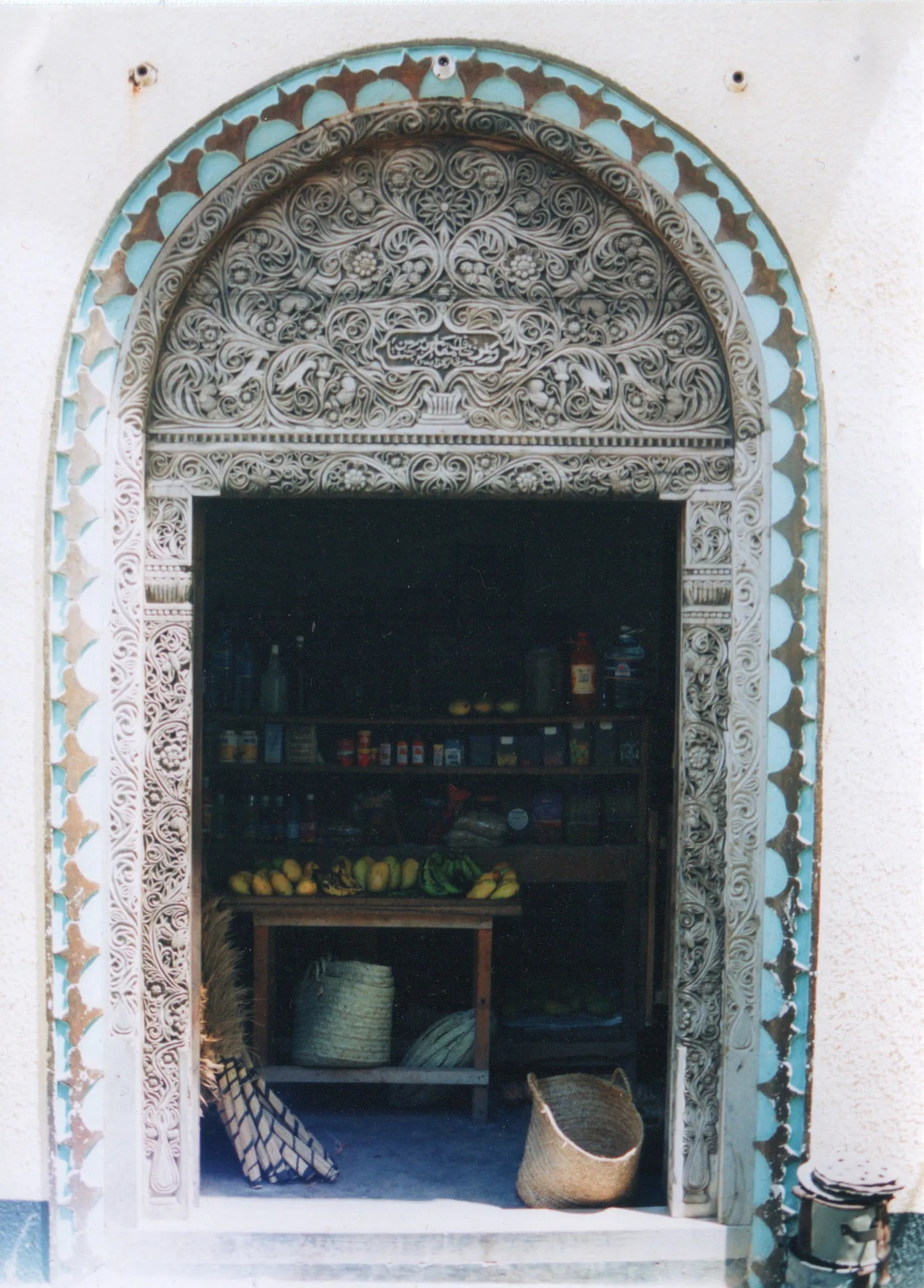
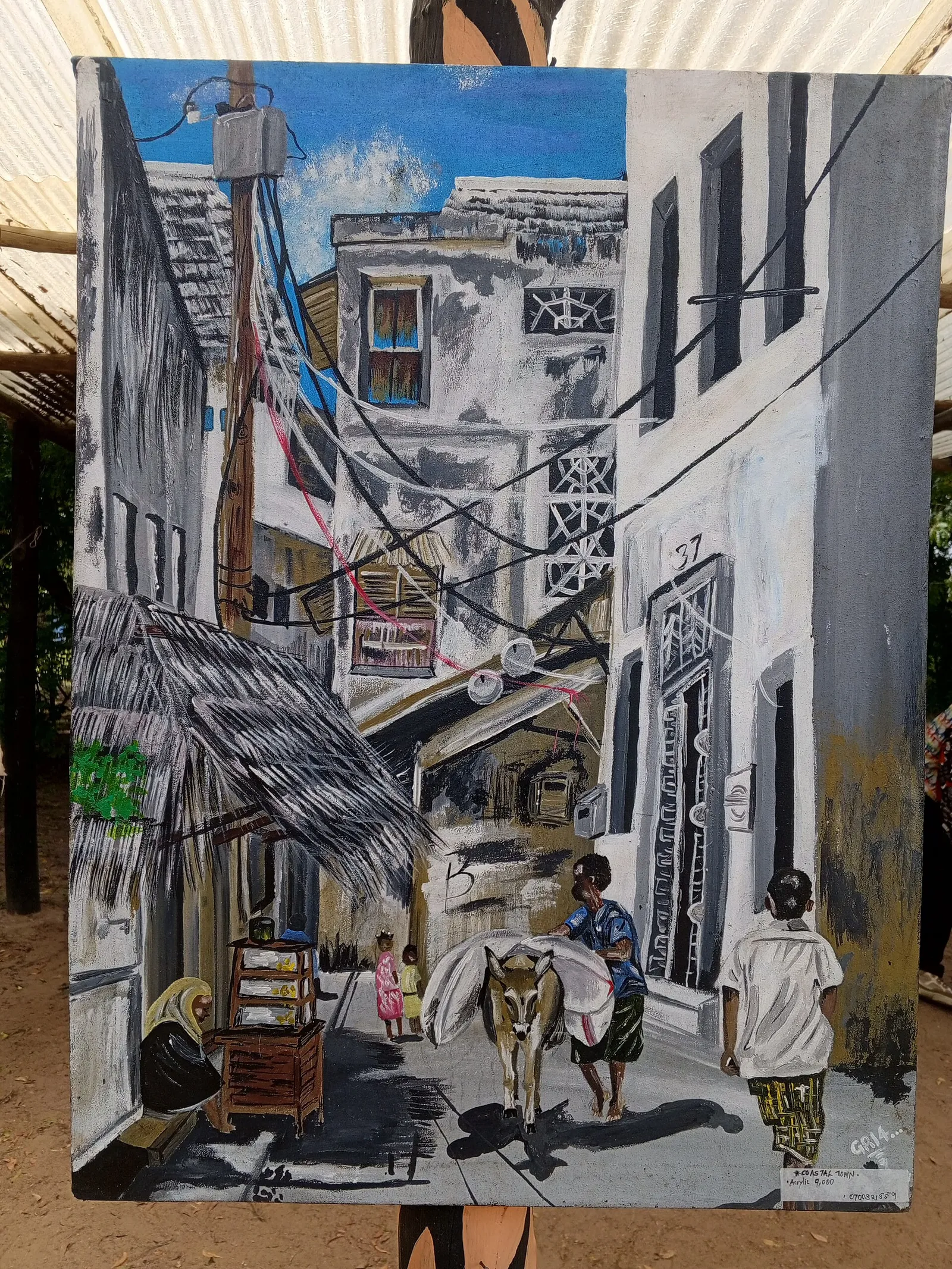
The old towns announce themselves through their doors — massive carved portals whose chains, lotus flowers and fintip spikes announced a household’s status and faith. Streets narrow to shoulder width, coral-stone walls keep the heat out, and at the harbour the wooden dhows that crossed the ocean for centuries are still built and repaired by hand beside fibreglass newcomers.
A thousand years of trade
Kilwa Kisiwani’s ruins in the south are a UNESCO site from the medieval gold trade; Bagamoyo was the mainland terminus of the caravan routes — its name remembered as “lay down your heart” — and later a mission town. Dar es Salaam grew from a sultan’s palace into the region’s biggest city. The trade winds that carried dhows north and south shaped every calendar on the coast, including the sailing seasons visitors still read about.
Food, music and the year
The coast eats differently from the inland: pilau and biryani rice, mishkaki grilled skewers, urojo — Zanzibar’s tangy soup-and-snack street mix — and octopus curry. Taarab, the coast’s orchestral music with strings, drums and sung poetry, fills Zanzibari weddings and festivals, and the island’s Mwaka Kogwa new-year celebration at Makunduchi each July is its most famous tradition.
Visiting the coast with respect
The coast is predominantly Muslim. Dress modestly away from hotel pools — covered shoulders and knees in towns and villages — and during Ramadan, be discreet about eating and drinking in public daylight hours. Ask before photographing people, greet in Swahili, and let Friday midday prayers reshape your timing rather than your patience. Do all of that, and the coast opens: invitations to homes, recipes explained, drum lessons on the beach — the hospitality the trade winds brought to these shores for a thousand years.
Kenya’s roughly 55 million people belong to more than 40 ethnic communities, and the country runs comfortably on two shared languages — Swahili and English — while everyone keeps their mother tongue at home.
The communities you will actually meet
Kikuyu — Kenya’s largest group, centred on the central highlands around Nairobi and Mount Kenya; you will feel their outsized role in business everywhere.
Luo and Luhya — western Kenya, around Lake Victoria and Kakamega; football-mad, famous for fish and ohangla music.
Kalenjin — Rift Valley runners: if your guide discusses marathons over breakfast, this is why.
Maasai and Samburu — the semi-nomadic pastoralists of the south and north whose red shukas and beadwork define Kenya’s imagery. Most land you will game-drive on is community-owned, so your park fees and conservancy payments directly support these families.
Swahili coast peoples — a millennium-old blend of African, Arab and Indian heritage in Mombasa, Lamu and Malindi: stone towns, dhows, biryani and taarab music.
Somali, Turkana, Rendille, El Molo — the dry north and east, where desert-edge cultures run camel economies and some of Africa’s most distinctive dress.
Being a welcome guest
Greet first, always — a rushed question without a greeting reads as rude. Learn a few Swahili words; the effort changes interactions. Ask before photographing people (and expect a small fee from beadwork sellers and moran — agree amounts up front). Support community-owned conservancies and community-run village visits rather than staged stops that tip drivers instead of families.
Handshakes matter; so does the right hand for giving and receiving. Dress modestly away from beaches, and expect relaxed, affectionate public culture in cities and more conservative norms on the Muslim coast.
Kenya’s cultural calendar mixes ancient rhythms with modern festival energy. Dates shift annually — confirm locally before planning a trip around one.
Worth timing a trip around
The Great Migration (July–October, Maasai Mara) — not a festival but the country’s great natural event; Mara River crossings peak in August–September. Book camps many months ahead.
Lamu Cultural Festival (usually November) — dhow races, donkey races, Swahili poetry and henna wars in the car-free stone town; the best single window into coastal Swahili culture.
Maralal International Camel Derby (usually August) — semi-chaotic, genuinely fun camel racing in Samburu country, with amateur entries welcome.
Mombasa Carnival (November) — the coast’s big street parade of coastal cultures.
Rhino Charge (June, moving venue) — an off-road charity scramble raising money for conservation; spectating is an adventure in itself.
Cultural experiences that give back
Bomas of Kenya (Nairobi) — crafted traditional homesteads and daily dance showcases; touristy but a genuine primer on 40+ communities’ music and dance.
Community-run manyatta and Samburu village visits — arranged through conservancies (Naboisho, Westgate, Kalama), where hosts set the program and keep the proceeds. Ask your camp specifically for community-run options.
Lamu by dhow — sail with local captains to Takwa ruins or Manda Island; sunset trips end with taarab on the roof terrace.
Nairobi’s music circuit — afro-jazz and Benga nights in Westlands beat any hotel floor show.
One rule of thumb applies everywhere: if the “village” feels staged and children chase you for sweets, walk away and book through the conservancy office instead.
Uganda packs astonishing cultural density into one country: dozens of ethnolinguistic groups, four surviving traditional kingdoms, and communities shaped by lakes, forests and the cattle frontier.
Who you will meet
Baganda — the largest nation, around Kampala: their Kabaka (king) remains a living institution, Luganda is the street language of the capital, and matooke (steamed plantain) is the national plate.
Batooro, Banyoro, Banyankole — the west’s kingdoms and cattle cultures; the long-horned Ankole cow is the region’s pride and its most-photographed resident after the gorillas.
Bakiga and Bakonzo — terraced-hills farmers around Kigezi and the Rwenzori; you will meet them as lodge staff, porters and guides.
Batwa — the forest people who lived in what is now Bwindi and Mgahinga until conservation evicted them in 1991. Community-led programs (the Batwa Trail) are how — and why — to meet them.
Basoga, Iteso, Acholi, Langi — the east and north, each with distinct music and dance traditions.
Karamojong — semi-nomadic pastoralists of the far northeast, Uganda’s most distinctive (and most misunderstood) culture; visit through sanctioned community programs only.
The etiquette that travels
Greet before asking, give and receive with the right hand, and treat elders and cultural leaders with visible respect. Dress modestly outside Kampala; ask before photos. English is official, Swahili is spreading, and a few words of Luganda transform market and taxi interactions. And wherever you trek or visit: hire the porter, buy from the community craft shop, and choose community-run experiences — Uganda’s tourism dollars reach deep when you let them.
Uganda’s cultural calendar runs from crater-deep tradition to Nile-side rave. Dates move year to year — verify locally.
Festivals worth planning around
Nyege Nyege (Jinja, usually September) — four days of electronic and African underground music on the Nile’s banks; Africa’s most famous festival. Adults-only, book early, pack for dust and glory.
Empango celebrations (Tooro & Bunyoro kingdoms) — coronation-anniversary festivities with royal drumming and dress; Fort Portal’s are the most accessible for visitors.
Imbalu (Bagisu, even years, around August) — the Gisu people’s public initiation ceremonies around Mount Elgon; profound, intense and strictly for respectful invited observation — go only with a community liaison.
Ndere Troupe (Kampala, Sunday/Wednesday nights) — the national dance showcase; the best single evening primer on Uganda’s regional dances.
Cultural experiences that give back
The Batwa Trail (Mgahinga/Bwindi) — Batwa guides lead a day through their former forest home: fire-making, medicinal plants, the Garama cave. Community-run, honest about history, and genuinely moving.
Bigodi Wetland walk (Kibale) — the template for community tourism: local guides, boardwalks, turacos and monkeys, proceeds to community projects.
Karamojong homestays & Kidepo cultural visits — cattle-camp stays arranged by community operators; herding life told in its own voice.
Craft and market circuits (Kampala) — the Owino and craft-market rows for barkcloth, baskets and kitenge; bargain warmly, pay fairly.
The through-line: prefer community-owned experiences, ask before photographing ceremonies, and never hand out sweets or cash to children — support the school or the craft co-op instead.
Rwanda is one of Africa’s most culturally coherent countries: a single language — Kinyarwanda — spoken by everyone, alongside English, French and Swahili, and a national identity deliberately rebuilt around being Umunyarwanda — one Rwandan.
Reading the social fabric
A shared kingdom heritage. Before colonial borders, Rwanda was a single kingdom with one monarchy, one language and clans that cut across families. That deep unity is why post-1994 reconciliation could take root.
History handled with care. The 1994 genocide against the Tutsi killed roughly a million people in a hundred days. Rwandans talk about it with a directness that can surprise visitors — memorials are graves first, museums second. Listen, follow your host’s lead, and never treat it as trivia.
Communities you will meet. Coffee and tea cooperatives on the hillsides, weaving and basketry cooperatives (the iconic agaseke peace baskets), the fishing villages of Lake Kivu, and the former-hunter communities around Volcanoes NP whose cultural village grew into the Gorilla Guardians project.
Being a welcome guest
Rwandans are formal: greet properly (“Muraho”, “Amakuru?”), give and receive with both hands or the right hand, and dress neatly. Ask before photographing anyone. Join Umuganda — the last-Saturday community work morning — if invited. And spend deliberately: cooperatives over souvenir stalls, community-run cultural villages over staged stops, and local guides everywhere. Rwanda’s transformation is community-funded, and your choices feed it.
Rwanda’s cultural calendar is small, deliberate and genuinely moving. Verify dates each year.
Worth planning around
Kwita Izina (Kigali/Musanze, usually September) — the gorilla naming ceremony, where each year’s newborn gorillas receive names in a public ceremony attended by thousands; Rwanda’s proudest conservation day.
Umuganda (nationwide, last Saturday morning) — community service until ~11:00; roads pause, neighbours build. Joining when invited is the single most authentic thing a visitor can do.
Kigali Genocide Memorial & memorial season (April) — Kwibuka (remembrance) runs through April; visits are welcome year-round but April carries particular weight and gravity.
Kivu beach days (Rubavu/Karongi) — not a festival but the ritual payoff: hot springs at Gisenyi, island boat trips, and lakeside fish lunches.
Cultural experiences that give back
Gorilla Guardians Village (Iby’Iwacu, Musanze) — former poachers turned cultural guides: traditional dance, medicine walks, the king’s court. Community-owned; the flagship of Rwandan community tourism.
Cooperative workshops — basket weaving, banana-beer brewing and coffee-cupping experiences in Musanze, Huye and Kigali; the cooperative label matters.
Ndoli joweli & craft markets (Kigali) — the caplaki craft cooperative market for fair-priced basketry and kitenge.
Kigali’s food scene — from brochette stands to one of Africa’s best café cultures; ask for the Rwanda-grown pour-over.
Etiquette in one line: participate when invited, photograph with permission, memorials with silence — and let local guides narrate their own story.
Botswana
Botswana
Peoples & communities of Botswana
All of Botswana
Peoples & communities
Botswana’s 2.6 million people are overwhelmingly Batswana, organised into the eight principal merafe (tribes) — Bangwato, Batawana, Bakgatla, Bakwena, Bamalete, Batlokwa, Bangwaketse and Barolong — alongside minority communities including the San (Basarwa), the Kalahari’s first peoples, Herero and Hambukushu farming communities in the northwest, and white Batswana farmers and safari families.
The social architecture
Merafe and the kgotla. Each merafe runs through its chief (kgosi) and the kgotla — the open-air community court where every adult may speak. Modern Botswana’s celebrated stability and low corruption trace directly to this consultative tradition; even parliament begins sessions with kgotla consultations.
Setswana and English. Setswana is the soul language (everyone greets in it); English is the official medium of government and schooling. Learners of either are received warmly.
The San communities. The Kalahari’s first inhabitants survived colonial erasure, forced relocations (notably from the Central Kalahari) and marginalisation. Today, community-run ventures — San-guided walks at D’kar, Ghanzi and in the CKGR’s edges — are how to meet living San culture on its own terms: tracking, plant knowledge, storytelling, told by San guides themselves.
Cattle country. Cattle remain the measure of wealth and identity across all communities — the highway fences exist to manage hoof-and-mouth zones, and a village road at dusk belongs to the herds.
Being a welcome guest
Greet in Setswana (“Dumela Rra/Mma”), defer to elders, and dress modestly in villages. Ask before photographing people or cattle posts. Support community-owned tourism — Khwai, Sankoyo and Mababe villages run their own concessions; San-guided ventures around Ghanzi and D’kar — so your money follows your footsteps.
Botswana
Festivals & cultural experiences — Botswana
Gaborone · Maun · the Kalahari
Festivals & cultural experiences
Botswana’s cultural calendar is quieter than its neighbours’ — the experiences here are older than festivals.
Experiences worth building a trip around
Mokoro trips (Okavango, year-round; flood peak Jun–Aug) — glide in a dugout poled by a local guide through papyrus and lily channels; the poler-led glide is Botswana’s signature and the communities of the NG ranges (Khwai, Sankoyo, Mababe) run many of the best.
San-guided bush walks (Ghanzi, D’kar, CKGR fringes) — tracking, plant medicine and fire-making taught by the people who wrote the curriculum; choose ventures where San guides lead and are paid properly.
Meerkat mornings (Makgadikgadi) — habituated clans at Jack’s Camp/Bush Ways country let you sit among them; sunrise on the pans is the photograph of the trip.
Sleep-outs on the pans (Makgadikgadi, dry season) — bedrolls on the salt, the Milky Way edge to edge.
Maitisong Festival (Gaborone, usually March/April) — the country’s main arts festival: music, theatre and dance at the Maitisong venue.
President’s Day holidays (July) — not a festival per se, but the whole country travels and celebrates; expect busy towns and joyous hospitality.
The etiquette of experiences
Book community-run where it exists, tip polers and guides directly, and never ride elephants or support cub-petting — Botswana’s tourism ethos is conservation-first, and visitors are expected to keep it that way. Greet (“Dumela”) before every interaction, and let the silences of the Kalahari do what they came to do.
Namibia
Namibia
Peoples & communities of Namibia
All of Namibia
Peoples & communities
Namibia’s 3 million people speak eleven official languages across a dozen-plus communities — one of Africa’s most multicultural societies, layered over Africa’s oldest continuous cultures.
The peoples
Aawambo (Oshiwambo speakers) — half the population, farming the fertile north around Oshakati and Ondangwa; Namibia’s political and cultural centre of gravity.
Kavango, Zambezi (Lozi, Subia) and Damara communities — riverine and central peoples with strong choral and craft traditions.
OvaHerero and Himba — cattle-culture pastoralists; the Himba of Kaokoland, in ochre and otjize dress, are among Africa’s most photographed peoples — which is precisely why photography etiquette and community-sanctioned visits matter.
Nama and Damara — speakers of the click-consonant Khoekhoegowab language in the south and centre.
San — the Kalahari’s first peoples, holders of tracking and plant knowledge measured in tens of millennia; visit through San-led living museums and community ventures.
Rehoboth Basters, white Namibians (Afrikaner and German), and Cape Coloured communities — the settler-era layers that gave the country its German cafés, Afrikaans farm culture and extraordinary bread.
The national temperament
Namibians are reserved, self-deprecating and quietly proud of their young stability — independence in 1990 after a long liberation struggle remains living memory. Greet formally, listen more than you talk about politics, and ask before any camera comes out. English works everywhere; a phrase of Afrikaans or Oshiwambo earns smiles. Support community conservancies — Namibia’s pioneering model that devolves wildlife rights to rural communities is the reason its wildlife recovered — so your visits fund the system that protects what you came to see.
Namibia
Festivals & cultural experiences — Namibia
Windhoek · the north-west · the Kalahari
Festivals & cultural experiences
Namibia’s cultural calendar is small but distinctive — and its cultural experiences are among Africa’s best-run.
Festivals worth timing
Windhoek Karneval / WIKA (usually April–May) — a full German-style carnival transplanted to Africa: balls, parades, Büttenrede comedy nights. Delightfully surreal; book tickets early.
Maherero Day (Okahandja & Windhoek, late August) — thousands of OvaHerero in Victorian-influenced dress parade to honor ancestral heroes; a solemn, spectacular cultural day — observe respectfully, ask before photographing.
Omagongo Festival (north-central, around April–May) — Aawambo communities celebrate the marula harvest with song, dance and (genuinely) the season’s first omagongo drink.
ENjando Street Festival (Windhoek, March) — the capital’s multicultural street carnival of music and costume.
Cultural experiences that give back
San Living Culture Museums (near Windhoek & Grootberg) — San educators demonstrate (and teach) tracking, medicine and craft on their own terms; the region’s model community project.
Himba village visits (Kaokoland/Opuwo) — only through reputable, community-paying operators; half-day visits that fund the homestead, guided by a Himba interpreter.
Katutura township tours (Windhoek) — community-run walking or bicycle tours: the single-mothers’ craft project, Kapana grill stalls at Single Quarters, shebeen culture with your guide.
Craft centres — Penduka (Windhoek), the Omba arts trust and Damara traditional markets for basketry and jewellery where artisans set prices.
One rule runs through all of it: Namibians price their culture fairly and expect you to ask — photographs, homestead entry, ceremony attendance. The asking is the etiquette.
We use one cookie to remember your session and improve
recommendations — see our Privacy Policy.